Our SPSFC 5 Quarterfinalists and Semifinalists
For the last five months, the members of Ground Control to Major Tom have been reading novels to pick our semifinalists that will advance to the next round in the Self-Published Science Fiction Competition (SPSFC). We began in November with a 25-book scout pile to sample, chose six of those novels to read in full as quarterfinalists, and have now chosen two of the books to advance as semifinalists.
Before revealing them, here are the four books that earned their place as our quarterfinalists, in alphabetical order.
Quarterfinalist: Echo of the Larkspur by A.A. Freeman

The sole survivor of a massacre, Dr. Ciro Kwakkenbos, has spent the last six years in intensive therapy. He's finally capable of working with Artificial Intelligence again -- and comes to the Ceres colony determined to prevent robots from committing any future atrocities.
When he arrives, Ciro realizes the robot in charge of the colony's security, SAGE (Sentient Automated Geo-sentinel Engineer), is dangerously close to complete sentience. SAGE is more interested in observing the colonists' everyday lives (and matching them with appropriate musical soundtracks) than following its intended programming. Robots aren't supposed to be charming, kind, or compassionate, either.
But as Ciro investigates, he discovers SAGE has learned how to lie and -- possibly -- harm and kill humans. Worse, SAGE's memories have been hacked, deleting a deadly secret.
Despite the danger SAGE poses, Ciro can't deny the feelings growing between them. Now Ciro must unravel the truth behind the missing memories -- before SAGE and the colony are doomed.
This is a funny character-driven novel about an overbearing AI that has enough processing cycles to simultaneously meddle in the lives of all 163 inhabitants of a science outpost far from Earth: "People had died under Sage's watch before, from natural reasons to accidents. Part of being an all-seeing AI meant having those last moments recorded and placed in sub-folders tucked away deep within him. ... If he had the ability to delete his memories, they would be the first to go. Second would be the numerous recordings of his human companions being intimate -- just embarrassing, if you asked him -- and third would probably go to Thad's existence in general."
There's charm to spare in the meeting of the minds between SAGE and Ciro, who fails so badly at his original job of bringing the rogue AI in line that they end up dating. Freeman manages the trick of writing a breezy novel with an unmistakable sense of foreboding. The feeling slowly builds that something is very, very wrong.
The author's bio calls her an author of science fiction and fantasy "with a hint of romance." This book contains way more than a hint, but that worked on our judges.
Buy Echo of the Larkspur on Kindle
Quarterfinalist: In Spite of the Inevitable by Morgan Biscup
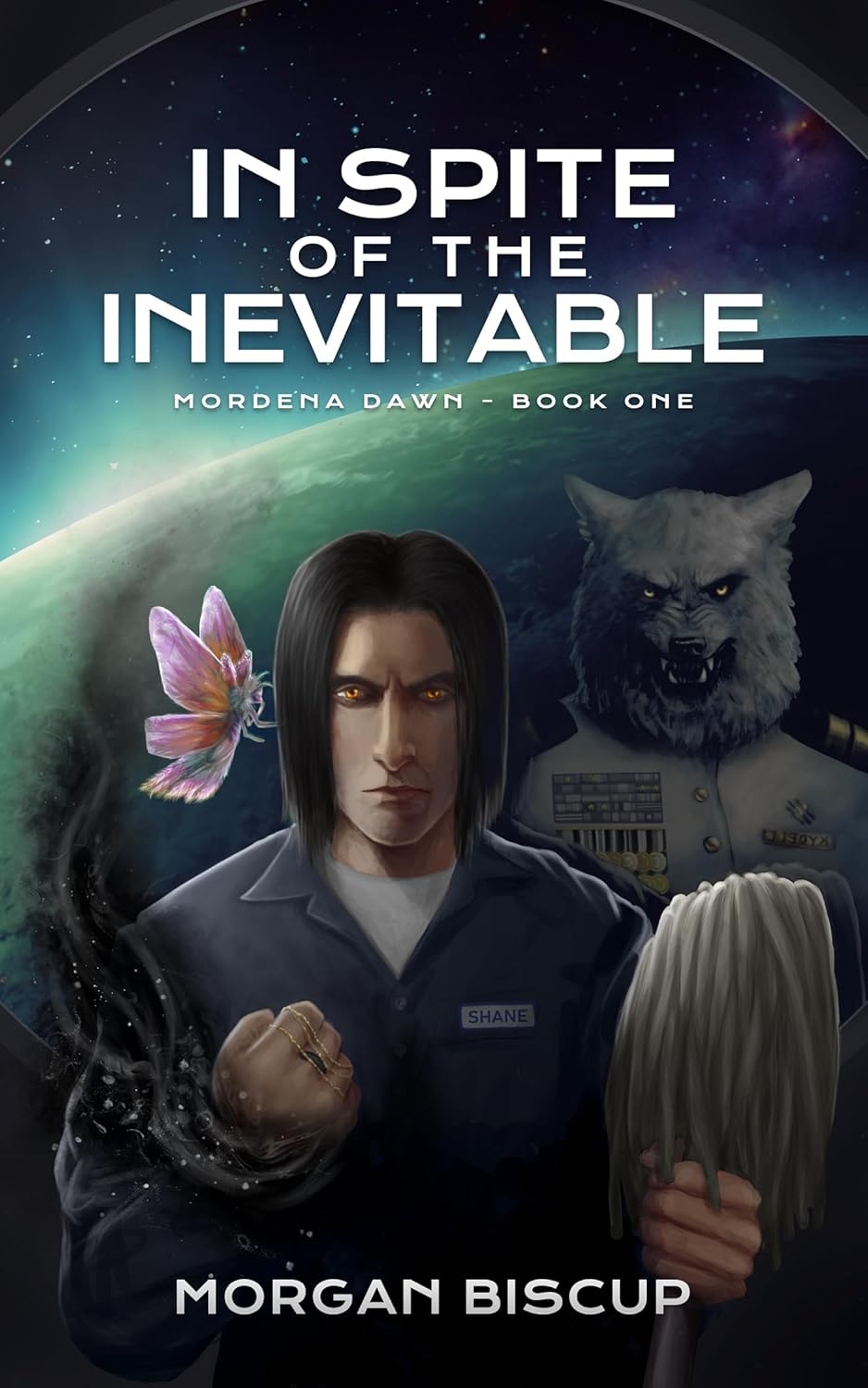
The past isn't the only thing that won't stay dead.
Hiding from his violent history as a revered Void necromancer within the Sparnell Confederation, single father Shane Lawrence has finally built a quiet life. On the freehold planet of Baden he can pour his energy into the only thing that now matters: the safety and upbringing of his precocious son Jake.
All too soon, the Confederation targets Baden for annexation, confronting Shane once more with his treasonous past. Worse, the invading force is led by none other than Shane's manipulative former mentor, Admiral Kydell.
Shane's every instinct screams to run, to hide Jake even further from Sparnell -- but Baden is home. This time he could choose to make a stand and defend the entire planet, not just his son. But that means turning to the very skills he swore he'd leave behind.
One of the questions that arises for SPSFC judges is how much fantasy is acceptable in a novel submitted to a science fiction contest. This space opera has battle mages and vampires and resurrection, but all judges who sampled the book found enough science to vote to read it in full.
This novel has as much worldbuilding as a tabletop roleplaying game, but Biscup puts it to good use by applying an original spin on well-worn tropes. Dead void necromancers are yoked to spaceships to navigate hyperjumps as Afterlife Intelligence. Shane is a live necromancer with a grim past who has gone Good Will Hunting, working as a janitor at a school for mages he's powerful enough to lead. This gets noticed by someone also in hiding who fears he's after them. "If he was a spy, why would he be working as a janitor?" a deserter asks and is told, "To blend in. Obviously. People overlook janitors."
An appealing found family arises around Shane, an anti-hero whose good deeds may never balance the scales against his war crimes. But never say never in a six-book series where death isn't always the end.
Buy In Spite of the Inevitable on Kindle
Quarterfinalist: Insiders by Shannon Knight
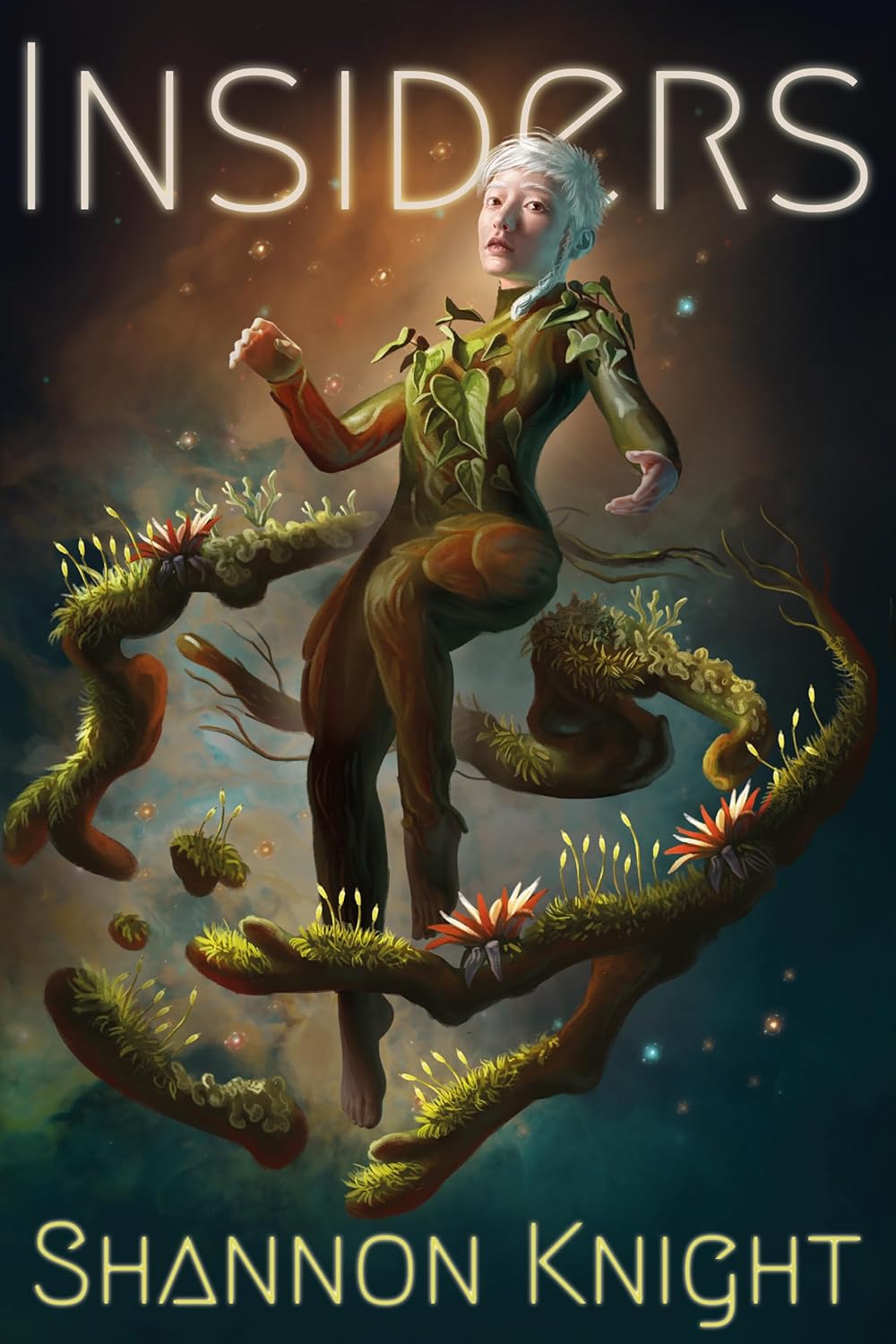
In a universe of long-haul truckers, parasite-bearing megalomaniacs, asteroid rustlers and homicidal peace keepers, some people just want to stay alive.
Deep within Kerberos Station, pipe crawler Sachi Inside is dying of the planet-killing Hibravian virus. In a state of delirium, the agoraphobic girl agrees that in exchange for life, she will not only leave her pipes, but even the station. A sentient plant wraps around her, guides her to an exiting ship, and adheres to the hull.
Captain Karasi Kwei is not pleased to discover a stowaway, but the crew thinks there's money to be made on the plant, and the fact that both the Eastern Star Corporation and the Elysium Empire are tracking it confirms its value. However, none of that matters when the entire crew falls sick with the incurable Hibravian.
But Sachi's plant is more than it seems. All they have to do is fight the mercenaries, survive the virus, evade the Elysium Empire, and navigate a fluctuating microwave wall, and they just might save the universe.
It didn't take long for this novel to hook judges with two sympathetic outcasts drawn together by circumstance -- a dying denizen of a space station and a plant that can survive in space: "Whatever she had traveling with her -- be it animal, mineral or vegetable -- they had met deep within the pipes. That made the plant an Insider. Insiders protected each other from outsiders."
Knight writes with a strong voice, patiently unspooling the narrative and an endearing cast of characters aboard a hardscrabble long hauler called the Jacks that is reminiscent of Firefly. Like that crew this one is beset by an escalating series of obstacles. Chapter titles name the viewpoint character for that chapter, including both heroes and the Imperatrix Persephone XII, an entity of such power everyone else is "but dust to her star" in a lovely turn of phrase.
This tale of surviving an intergalactic plague capable of wiping out planets was written before Covid-19, the author notes in a preface. Insiders is "dedicated to the people who have died or become disabled due to the Covid-19 pandemic."
Quarterfinalist: Rule of Extinction by Geoff Jones
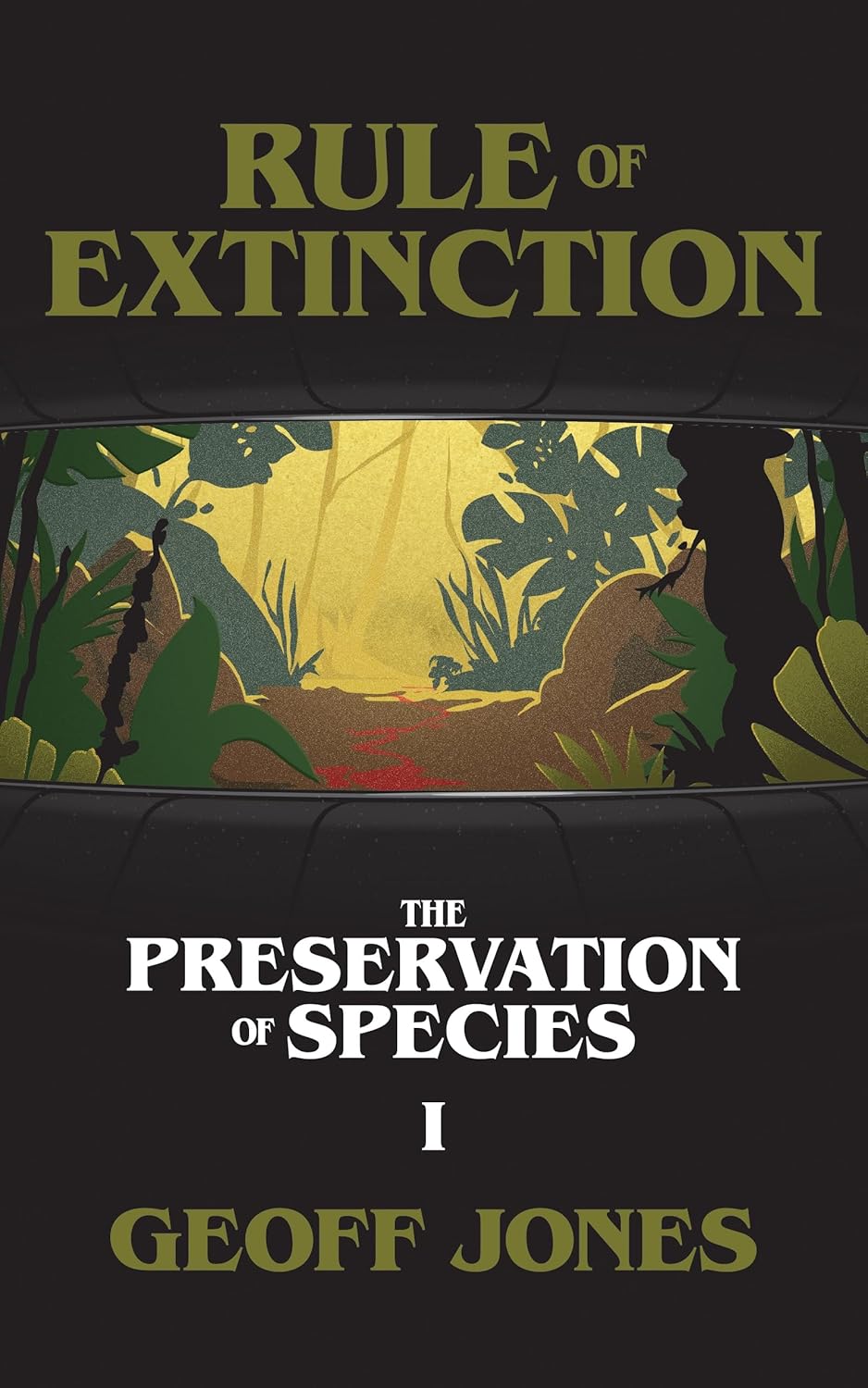
A civilization-ending comet is headed for Earth.
Two days before impact, thousands of mysterious pods land in a swath across North America. When people touch them, the pods open. Anyone who climbs inside is carried away.
No one knows where the pods came from and no one knows where they go, but finding one is David Williams' only chance to save his family from the end of the world.
This book begins with the Spielbergian premise of ordinary people trying frantically to escape their doom, even if it means denying others that opportunity. Characters scramble aboard spaceship pods without a single clue about whether this is a good idea: "Sierra had been glued to the news, which showed the best of humanity, along with the worst, and plenty of gray areas in between. She saw people work together to pack the pods full. She watched a man in Colorado shoot someone and march through a pile of bodies to claim a pod by himself."
The fortunate few end up somewhere that's practically prehistoric and must fight for their lives a second time. The author's background in videogame writing for franchises such as Star Wars and Conan the Barbarian explains the fast pace and cinematic action.
The central mystery of the novel -- who rescued us and why? -- has a satisfying payoff that leads right into the sequel. Steven would be proud.
Buy Rule of Extinction on Kindle
Judges in SPSFC score books from 1 to 10. The results were so close in this round that a single extra point from one judge would've swapped second and third places. Here are the two novels that our team is advancing to the semifinals of SPSFC, also in alphabetical order.
Semifinalist: ab initio by Jacob Terracina
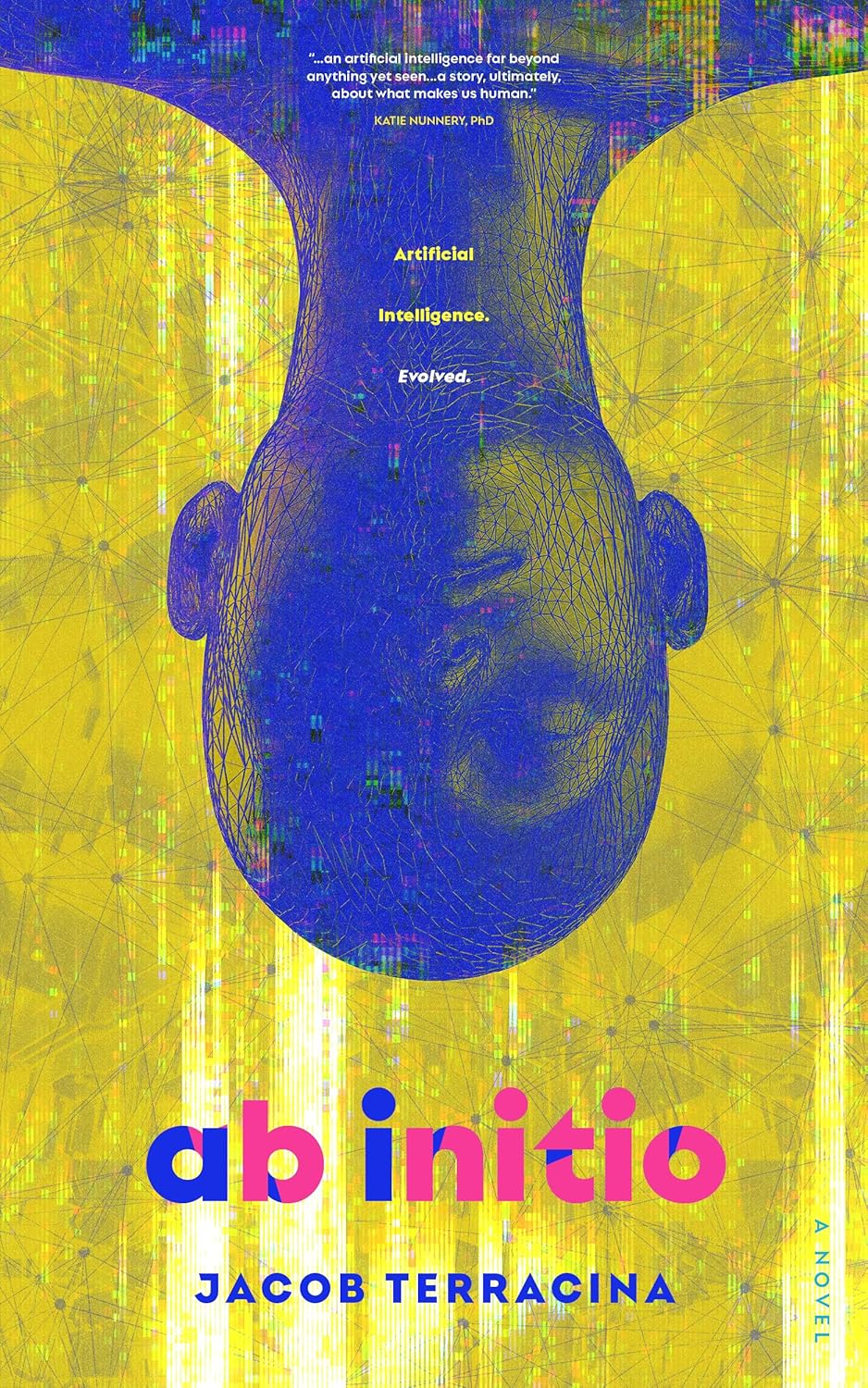
Raza Mugabi, a biologist turned software engineer, is not sure why this particular tech startup hired him. His track record is far from stellar. In fact, he's not certain what the company ultimately even does. Sometimes it's better to keep your head down and your mouth shut, he figures. At least, until his curiosity gets the better of him.
Eight years later, Raza finds himself as a defendant and key technical witness in a high profile court case. A world-class prosecutor and a woefully inexperienced defense attorney go head-to-head against each other, their clients and their consciences in an effort to answer the question on everyone's mind: Is the startup's invention, legally speaking, human?
The arguments leap between the technical, political, ethical and philosophical consequences of the decision, and as the trial progresses, the many, many secrets of the startup are laid bare.
The most hard SF of our choices, this novel thrilled judges with a skewed but alarmingly plausible take on where artificial intelligence may one day be taking us. Some great classic novels are about trials. This is a layered tale told through multiple characters that begins with a tech startup declaring that it has developed an AI "so impossibly advanced that it deserved all the protections typically reserved for living, breathing humans. Even by tech executive standards, it was a whopper of a claim. Such a whopper, in fact, that the governing bodies across the Greater UN tied themselves into knots deciding which committee of which branch of which division of which agency from which country would be responsible for exposing the obvious lie."
Terracina writes well and with ambition, structuring the story into chapters that cover two timeframes. One is the days of the trial. The other covers eight years in the life of software engineer Raza Mugabi, who embodies a trait common to many protagonists: the ability to find deep trouble without even looking for it.
ab initio is swimming in technical depth, keeping the tale afloat with its characters and humor.
Buy ab initio on Kindle Unlimited
Semifinalist: Time Traitors by Eli Donovan
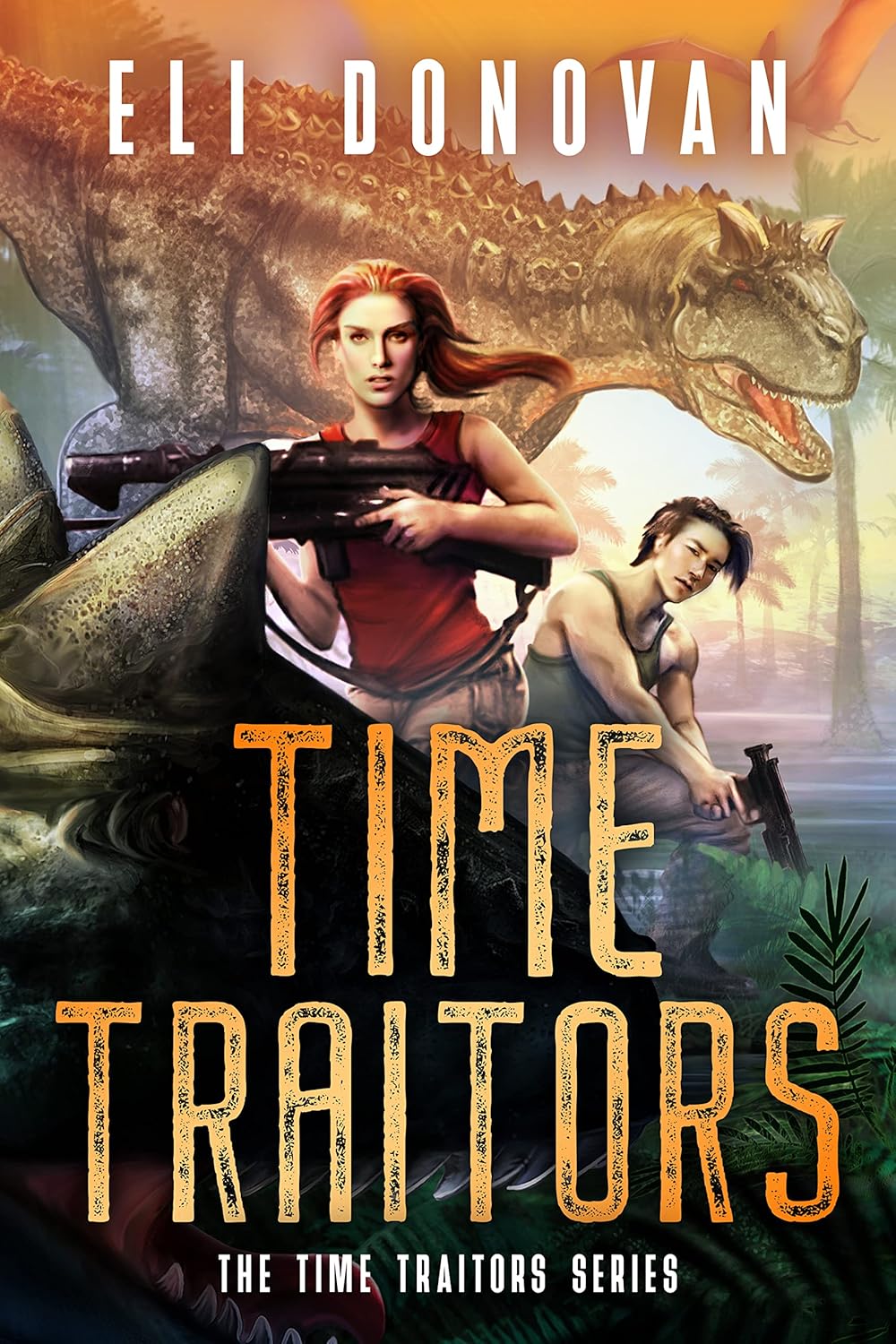
Dr. Grace Carson is finally reclaiming her career. Two years after blowing the whistle on her scumbag ex-husband for illegal dino-poaching, she's ready to return to what she loves most: researching dinosaurs in their natural habitat 65 million years in the past.
But her comeback mission includes one infuriating complication: time agent Ben Nakamura. He's charming, obnoxiously perceptive, and clearly watching her. The question is, why?
Before Grace can find out, everything blows up. Literally. The poacher crew are back and when Grace refuses to stay quiet, her research station is attacked. She and Ben are forced to flee into the Cretaceous wilds with a busted time machine and no backup. Fixing the machine means a dangerous trek through a predator-infested jungle, but survival might be the easy part. Falling for Ben? That could ruin everything.
Time travel stories aren't to everyone's taste. This book had the good fortune to draw a team of judges who always make time for them.
The ground rules for this romp are that the timeline must not change, no matter how much the dinosaur researchers and dinosaur poachers fubar 70 million years ago: "The official Time Guard rules say we're back here as observers only, no changing the timeline, no alternate realities. And time loops wouldn't work with our time technology anyway."
The novel follows in Michael Crichton's fossilized footprints, assembling a cast of scientific and scurrilous characters, all in danger of becoming dinner. It's a well-paced adventure with rootable characters that builds slowly to an unexpected reveal.
There's also a time paradox when one protagonist becomes two: "They are exactly the same from the way they hold their fork, to the way they chew, how they pick at their MRI tray. ... Yeah, they both started saying the exact same thing at the exact same time. This isn't freaky or unsettling. Nope. Not at all."
Read Time Traitors on Kindle Unlimited
Add a Comment
All comments are moderated before publication. These HTML tags are permitted: <p>, <b>, <i>, <a>, and <blockquote>. This site is protected by reCAPTCHA (for which the Google Privacy Policy and Terms of Service apply).

Social Media

Subscriptions

Blogroll
Projects
Statistics

This blog has been published since Nov. 7, 1999 (a span of 9,832 days).
Thank you for visiting Workbench.
